Kitchen Planning Advice : Cooker Hoods
When designing a kitchen, not only the layout and furniture are often the first consideration, but also the appliances that you choose.
Plan your perfect kitchen
Being able to translate your ideas into a stylish kitchen just the way you imagined it is an absolute must. But it shouldn't be limited to just aesthetic considerations – incorporating ergonomic considerations into your design will make your life much easier in the kitchen. This is why we have compiled an overview of important points that you should take into account when planning your kitchen and choosing your household appliances.
Efficient kitchen planning based on the work triangle concept
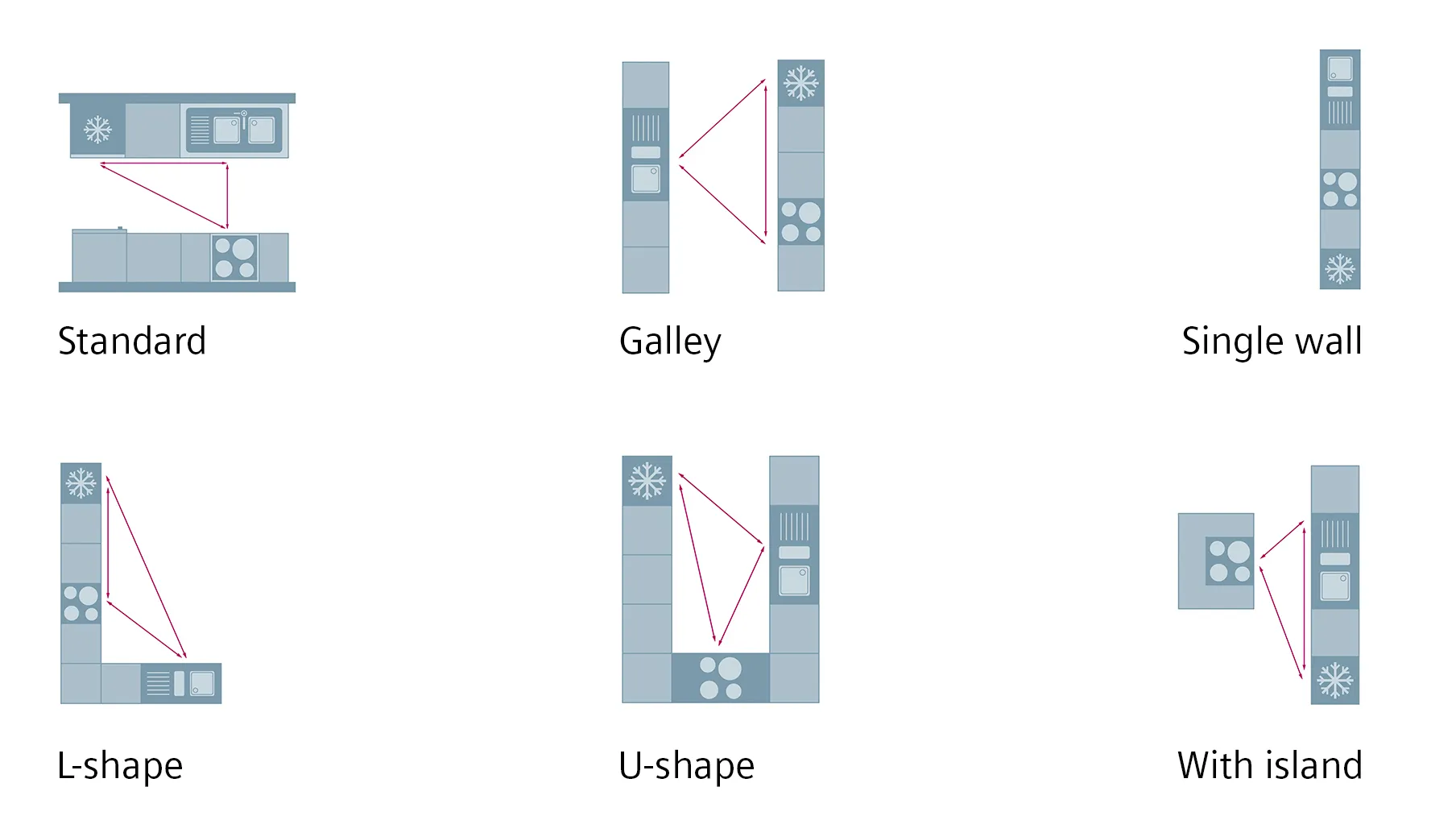
The kitchen work triangle is a key kitchen layout design principle. The work triangle consists of the three most frequently used work areas in the kitchen:
- Washing (dishwasher and kitchen sink)
- Cooking (cooker/oven, hob) and
- Refrigerating/freezing (fridge and freezer)
The closer these facilities are to one another, the more efficiently you can move around your kitchen – and everything you need will be within easy reach.
Please note that the work triangle concept cannot be used in single-file/one-way galley kitchens because everything is in line along one wall. For this type of layout, it is important to arrange the work areas in the correct order, with the dishwashing area in the middle.
The right position
For optimised ergonomics to facilitate your work, the position of the cabinets and appliances also plays a key role alongside the work triangle. Frequently used utensils and appliances should be within easy reach (80 to 160 cm above the floor). This means that you avoid having to frequently bend down or reach for a stepladder, thereby reducing your risk of accidents and injury.
When planning your base cabinets, from an ergonomic perspective it is best to opt for drawer solutions. This way, you can see everything simply by looking down and do not have to bend down or kneel quite so often in order to get to the back of the cupboard. The same applies to ovens. If you are unable to install your oven at eye level because the only space available for it is underneath the work surface, a good alternative is to use telescopic shelf rails or an "oven carriage" (drawer-like door).
The height of the worktop is another key factor that can make cooking easier if you get it right. Always base the height of the work surface on the height of the person who is going to be doing most of the cooking. Ergonomically speaking, the ideal height for the hob is 20 cm below elbow height, or a height between 85 and 95 cm.
Smart kitchen with Home Connect
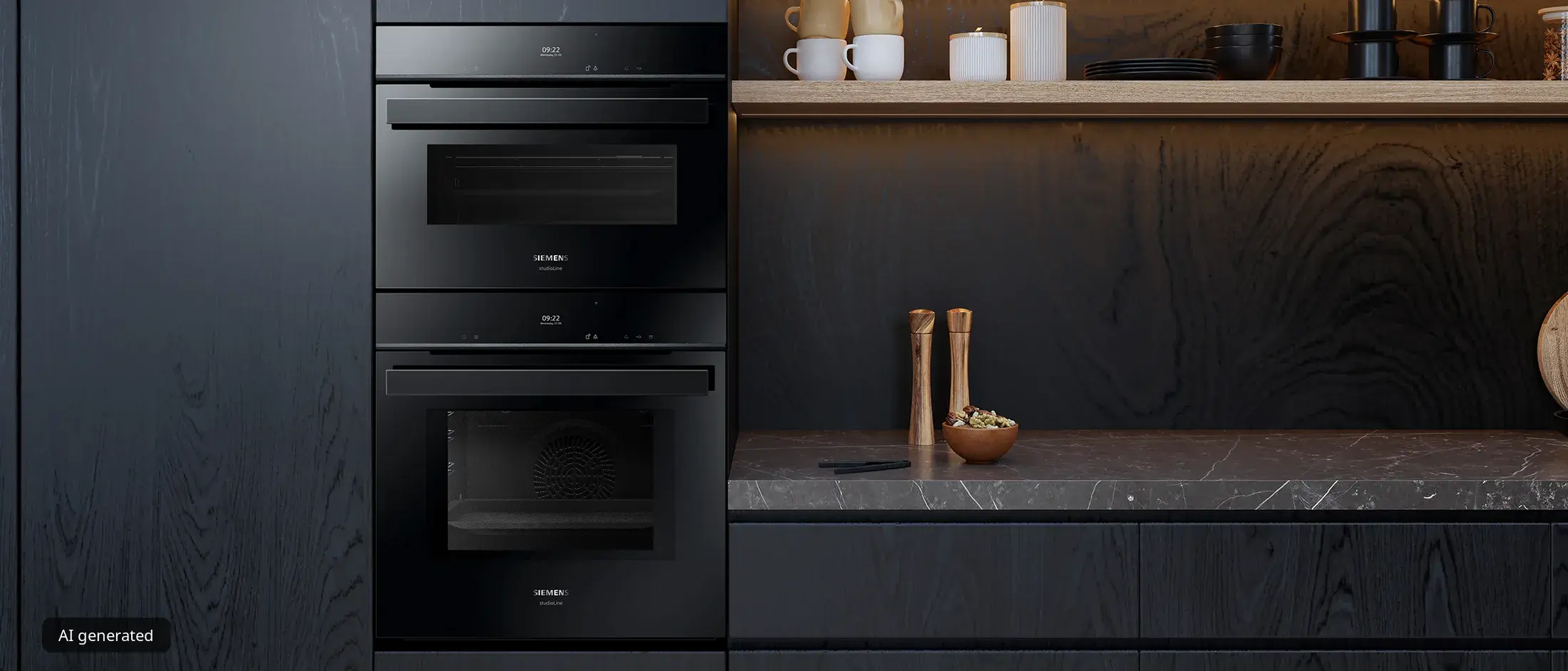
In some kitchens, the only space available to install the oven is in a base cabinet. This makes for sub-optimal ergonomics, meaning your oven will not be as easy to use as it could be. The answer to this comes in the form of Siemens ovens with Home Connect: Home Connect allows you to control your oven from your smartphone, or alternatively, by means of voice control using Amazon Alexa or Google Assistant. So now, the only time you will need to bend down is when you are putting your food into the oven or taking it out again.
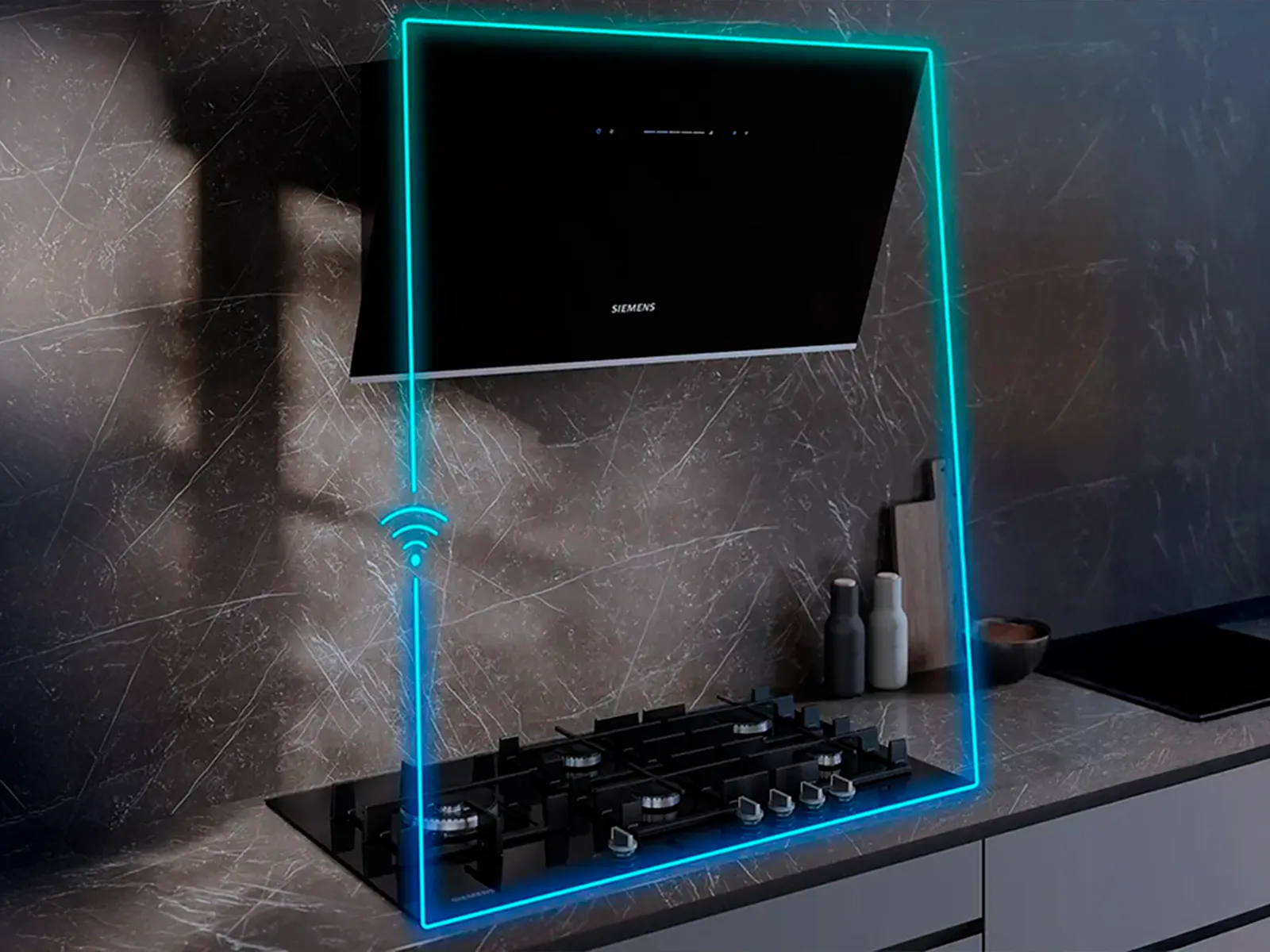
The Home Connect app also allows you to control additional household appliances from your smartphone for yet more flexibility. You can easily have your hob and extractor hood communicate with one another directly to achieve optimal steam extraction. Home Connect opens up a whole load more possibilities with your household appliances and makes your life a whole load easier.
Attractive feature or seamlessly integrated – appliance design that caters to your tastes
When people plan kitchens, their primary focus is often the kitchen layout and the colour and materials of the cabinets. But it is important not to forget how much of an impact the kitchen appliances can have on the look of your kitchen.
Whatever you choose, Siemens household appliances are designed to work well together so that you can have virtually any combination of appliances and be sure that they will perfectly complement one another.
Option 1
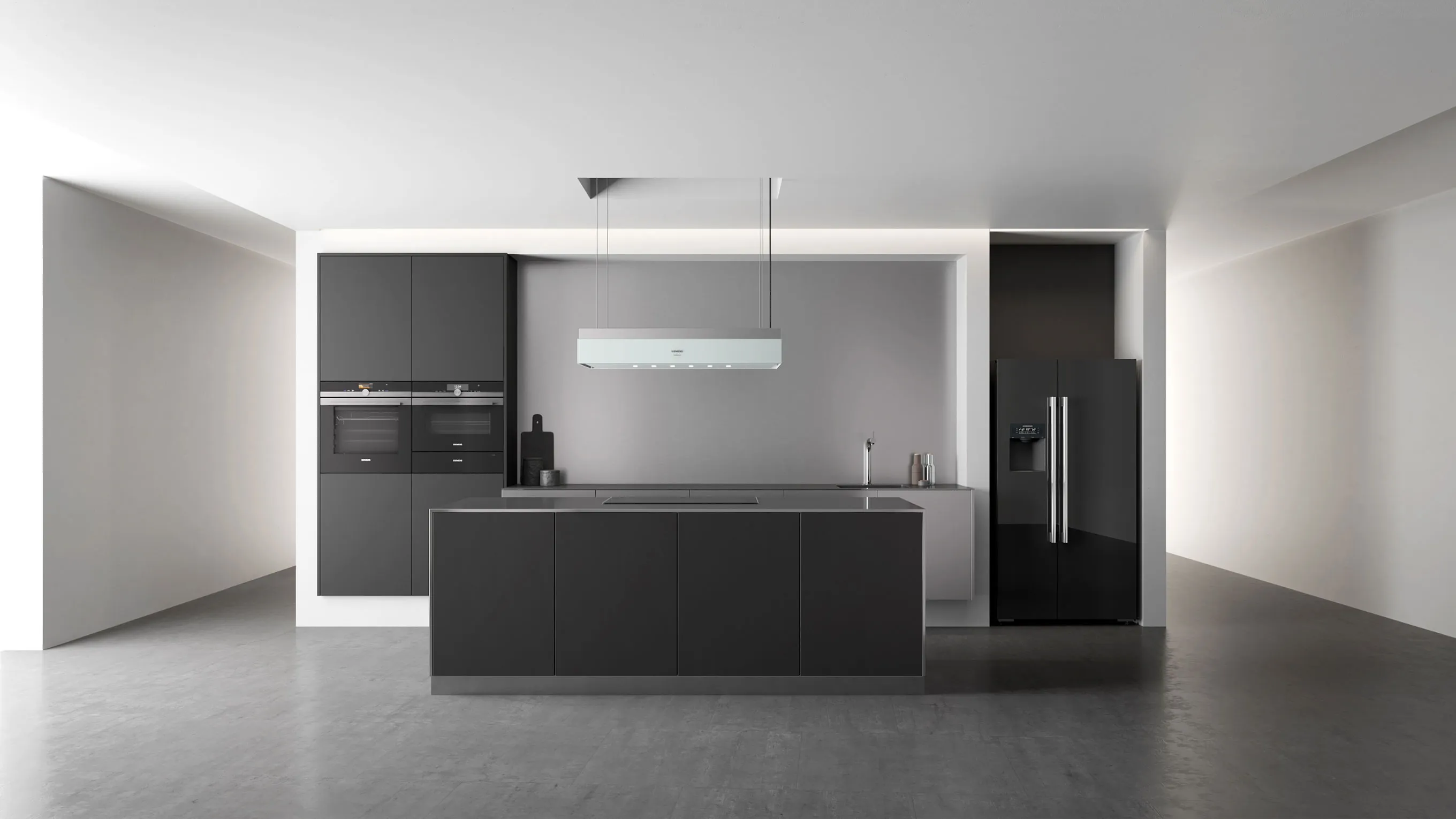
Is the appearance of your household appliances important to you and do you want to show them off? If so, opt for appliances with a striking design that sets them apart from the rest of the kitchen and makes them a focal point, e.g. an attractive extractor hood or a freestanding fridge in black steel.
The right extraction solution
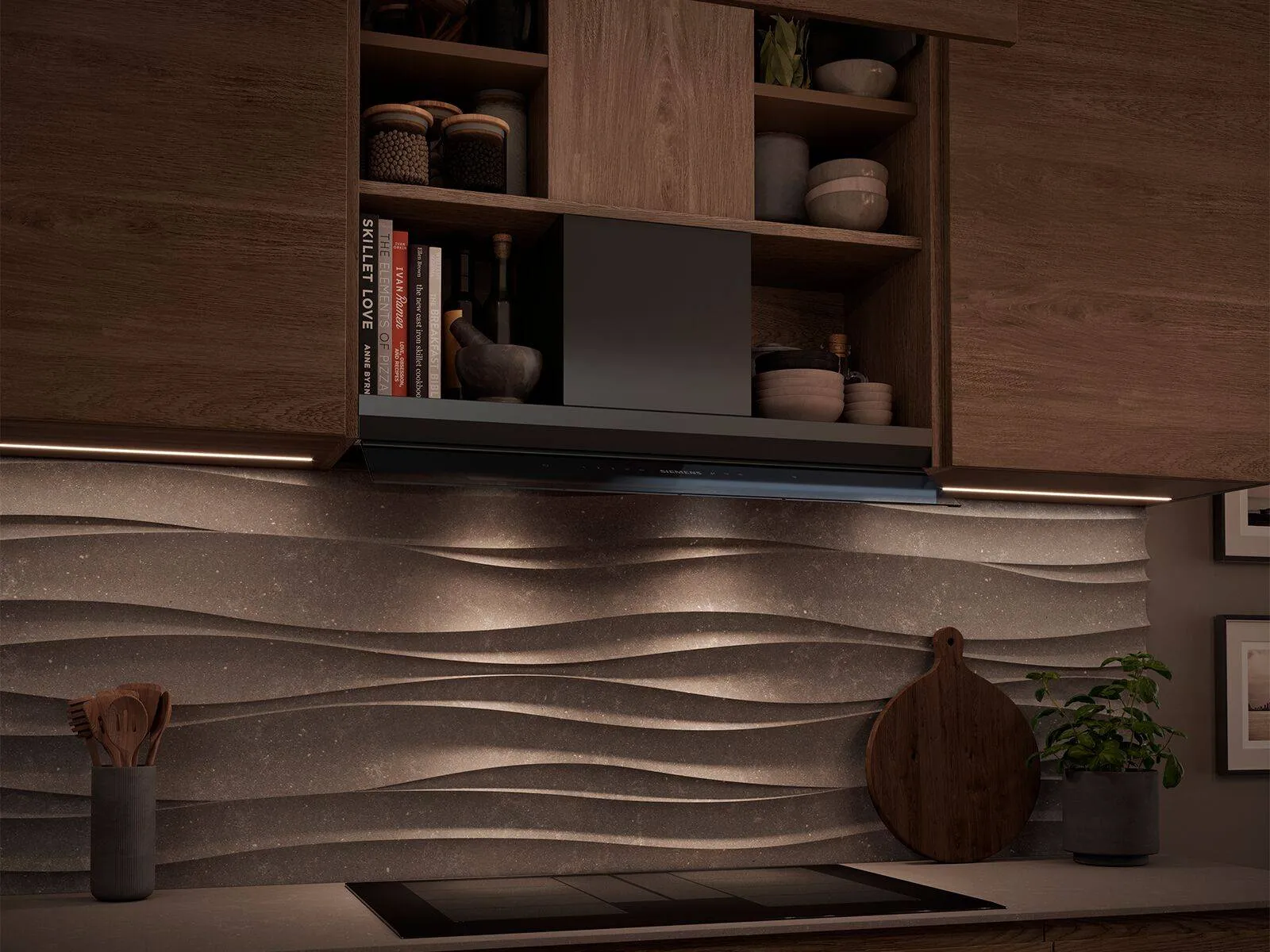
To make finding the right solution for your living situation among our wide range of extraction systems more manageable, we have gathered all the most important information about extractor hoods in one place for you.
Noise levels
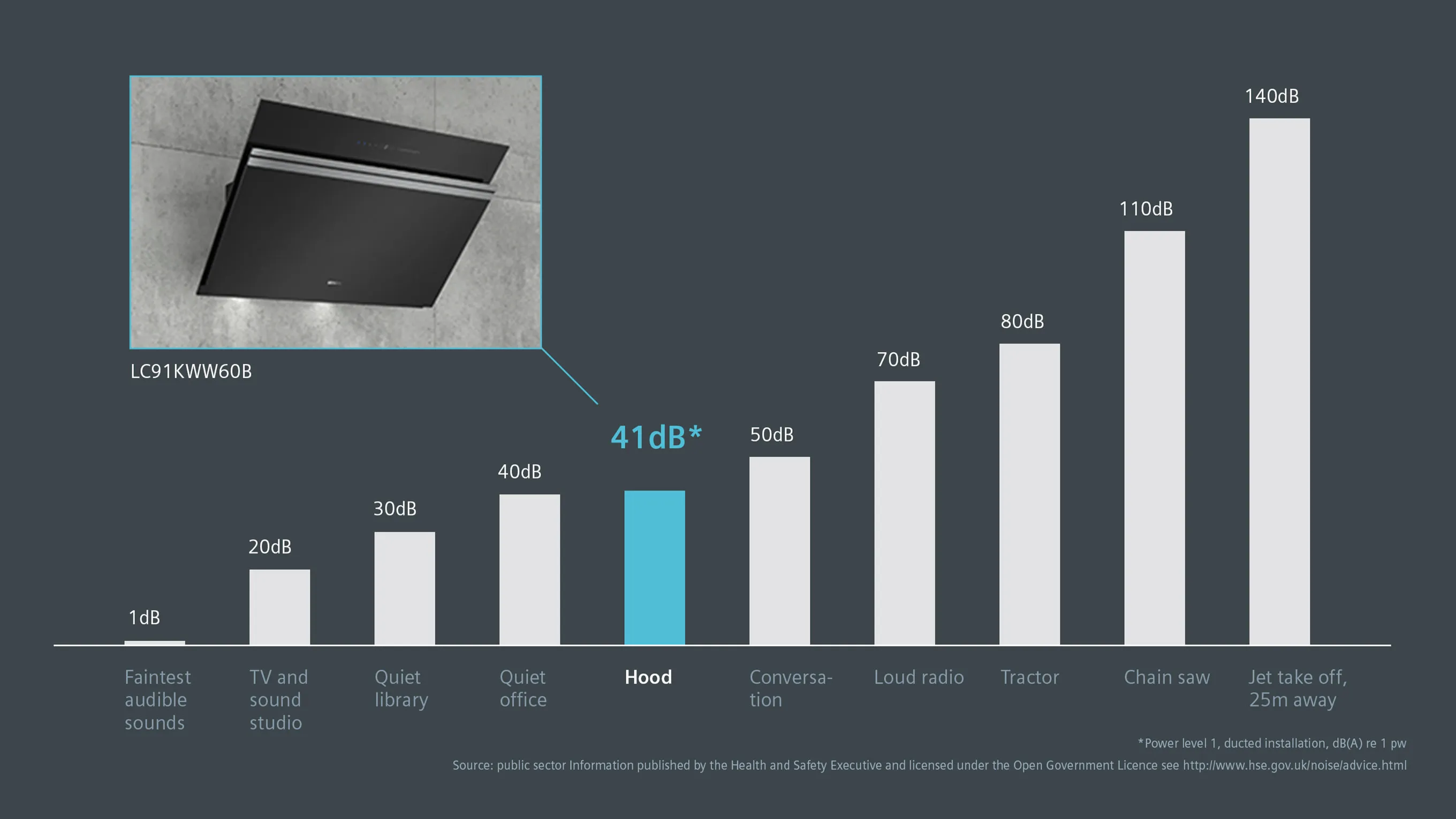
There's nothing better than getting together with friends to cook, eat good food and enjoy each other's company. An extraction system that is too loud can make conversation more difficult, while effective odour extraction remains important. Siemens extractor hoods are designed to balance strong extraction performance with low noise levels. Advanced engineering helps reduce vibration and airflow noise, while selected models feature sound insulation to support quieter operation. Some models operate at noise levels as low as 37 dB*, helping create a more comfortable kitchen environment while cooking and socialising.*Noise levels vary by model and operating setting.
Air recirculation (ductless) or air exhaust (ducted)?
Every kitchen is different. That's why Siemens extractor hoods offer the flexibility to be installed in either ducted or recirculation mode. If external ducting is available, air can be directed outside the building. Alternatively, recirculation mode filters grease and odours before returning the air to the room, offering a practical solution without the need for additional ducting infrastructure. This flexibility allows you to choose the installation option that best fits your home, kitchen layout and renovation plans.
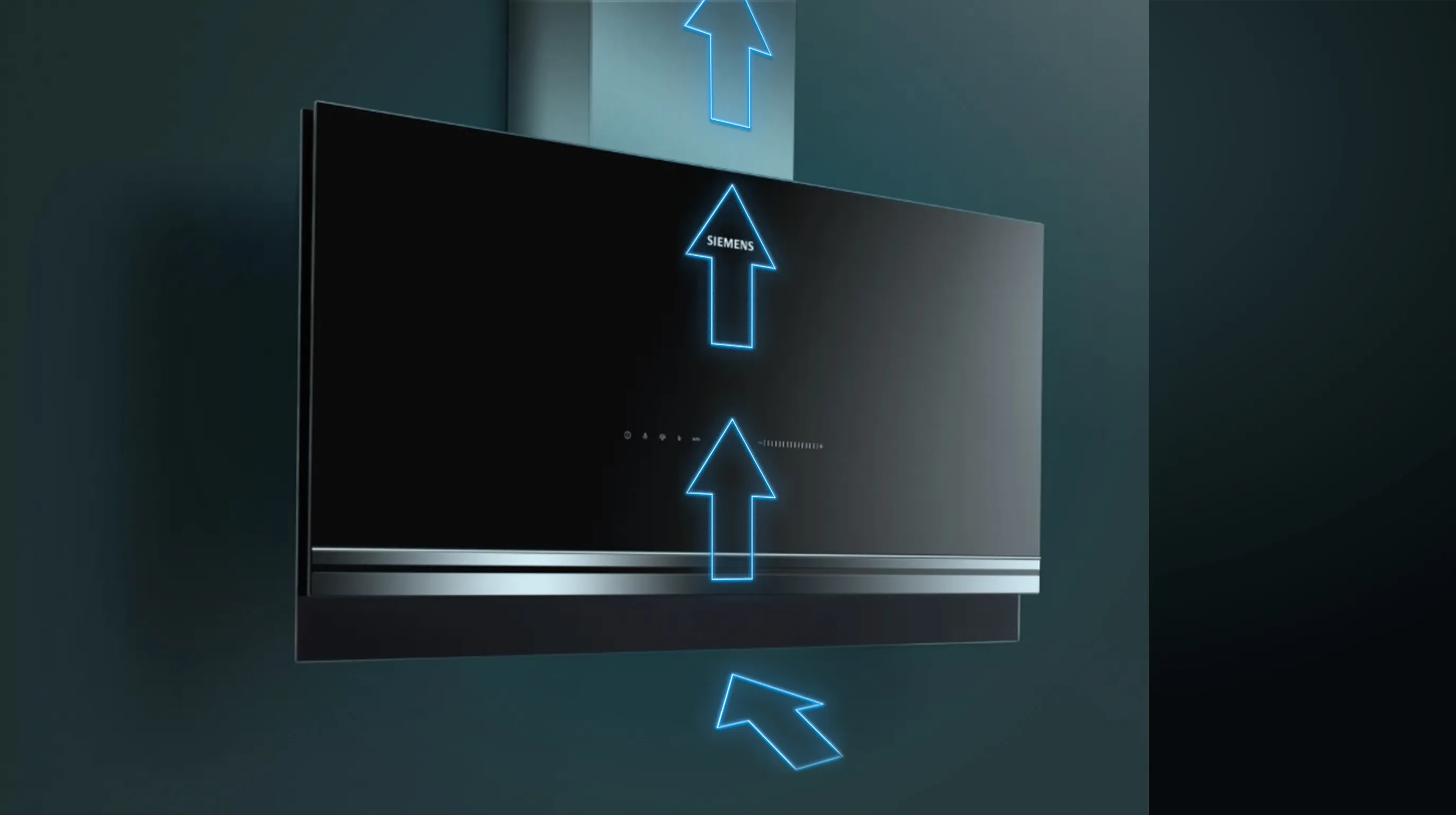
Air exhaust (ducted):
- If installed optimally, eliminates up to 98% of odours
- Extracts steam
- Correctly planned air exhaust ducting system required
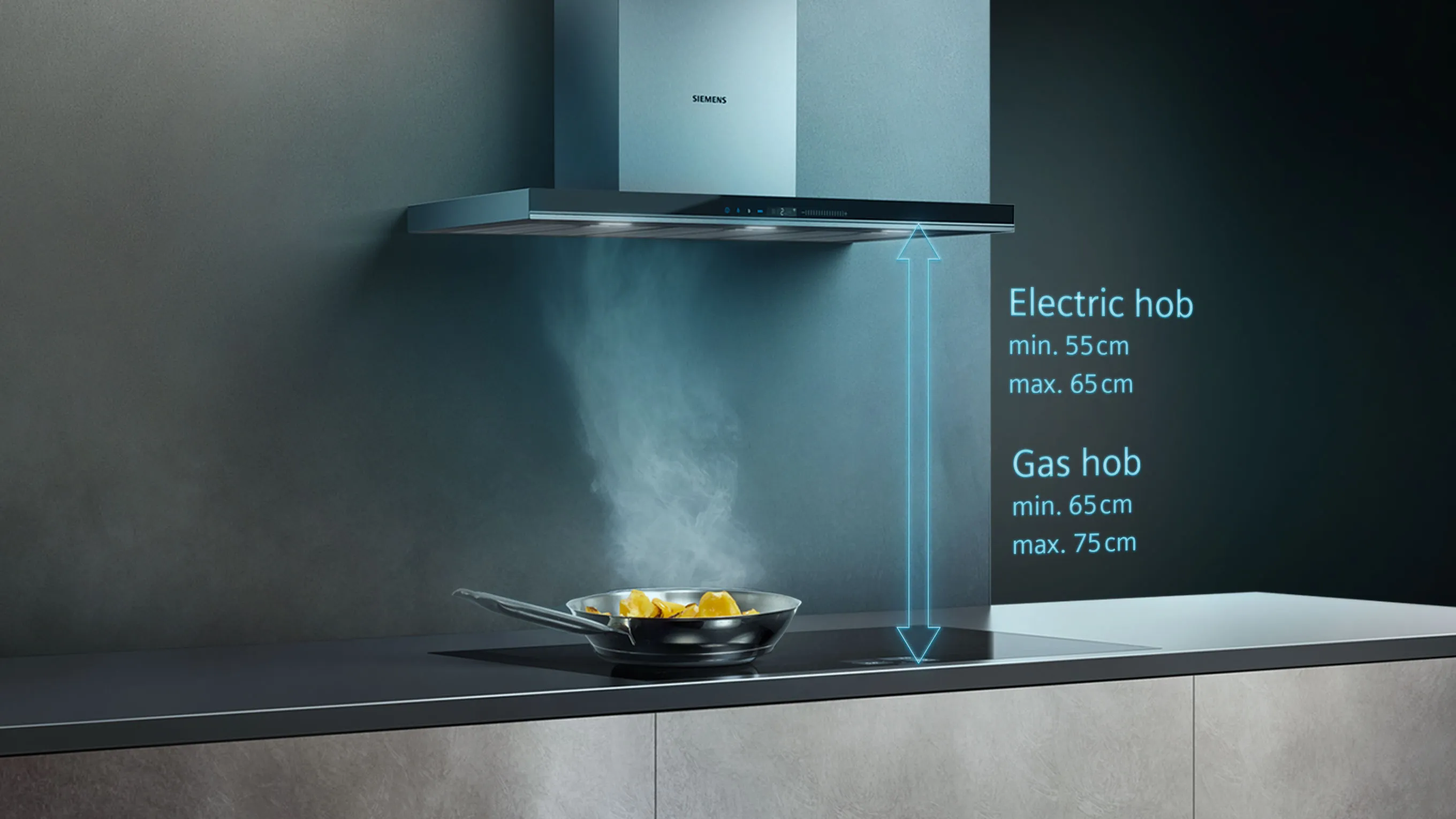
The right distance between hood and hob
To ensure that your extractor hood functions correctly and that you can cook uninterrupted, it is important that you allow the correct clearance between the hood and the hob when installing the hood (if you are not using an extraction solution that is integrated into the hob). It is therefore advisable to install the extractor hood 55 - 65 cm above the hob. If you have a gas cooker, the clearance should be 65 - 75 cm.
Are you on the tall side? If so, our inclined extractor hoods and ceiling extractor hoods are the perfect solutions for that extra bit of headroom. Alternatively, you could opt for a hob with an integrated extraction system.
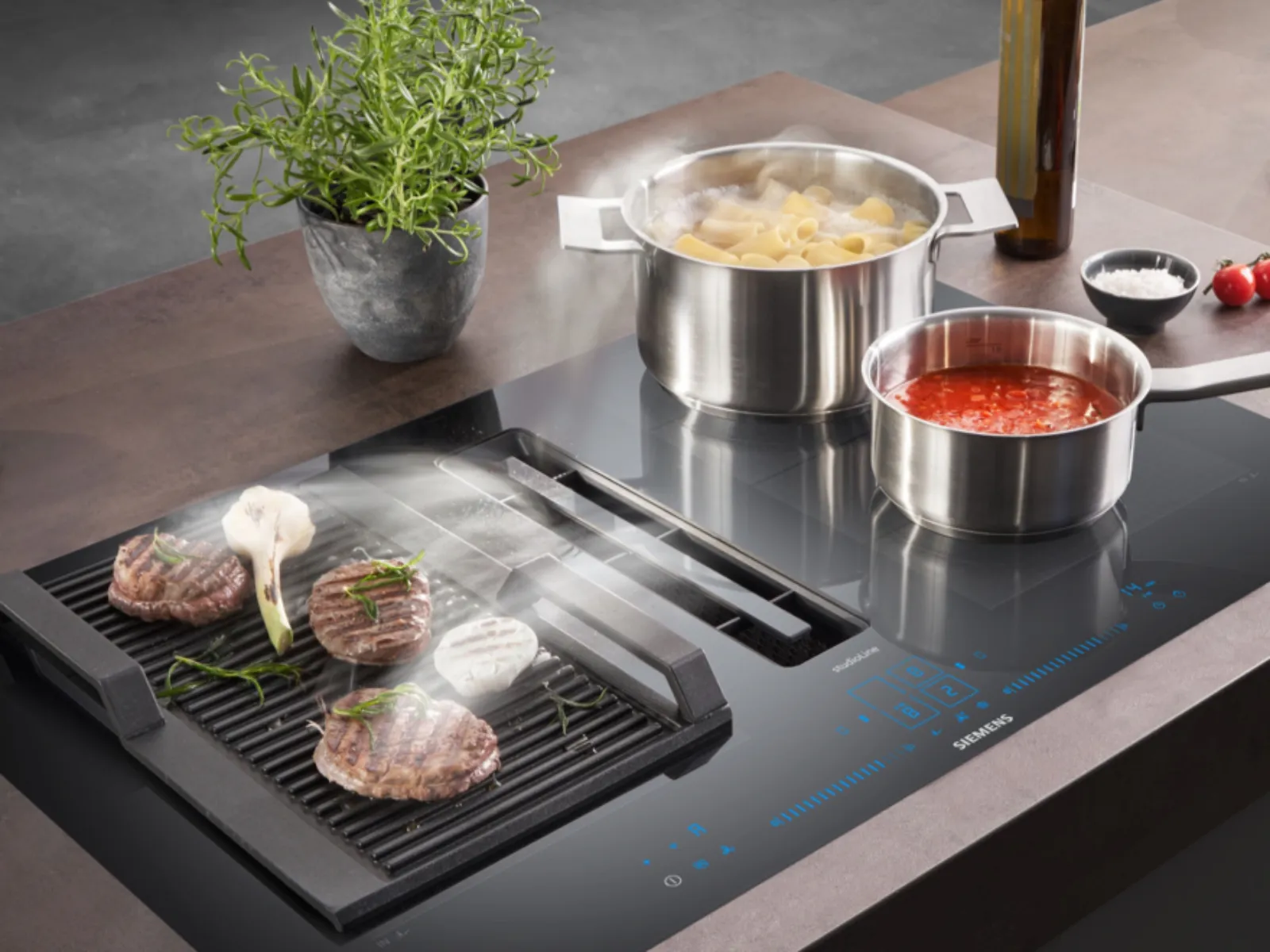
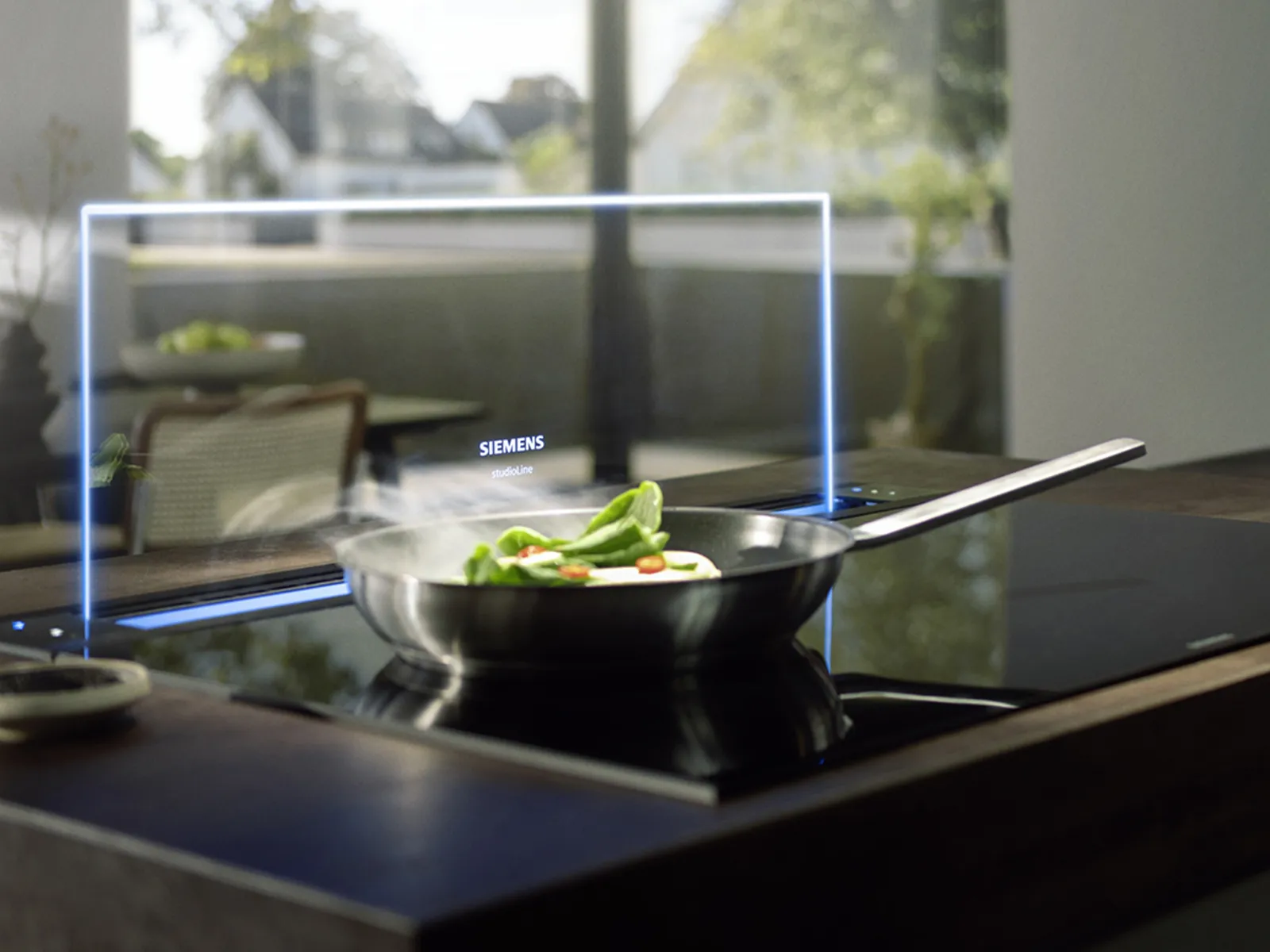
Hobs with integrated extraction system
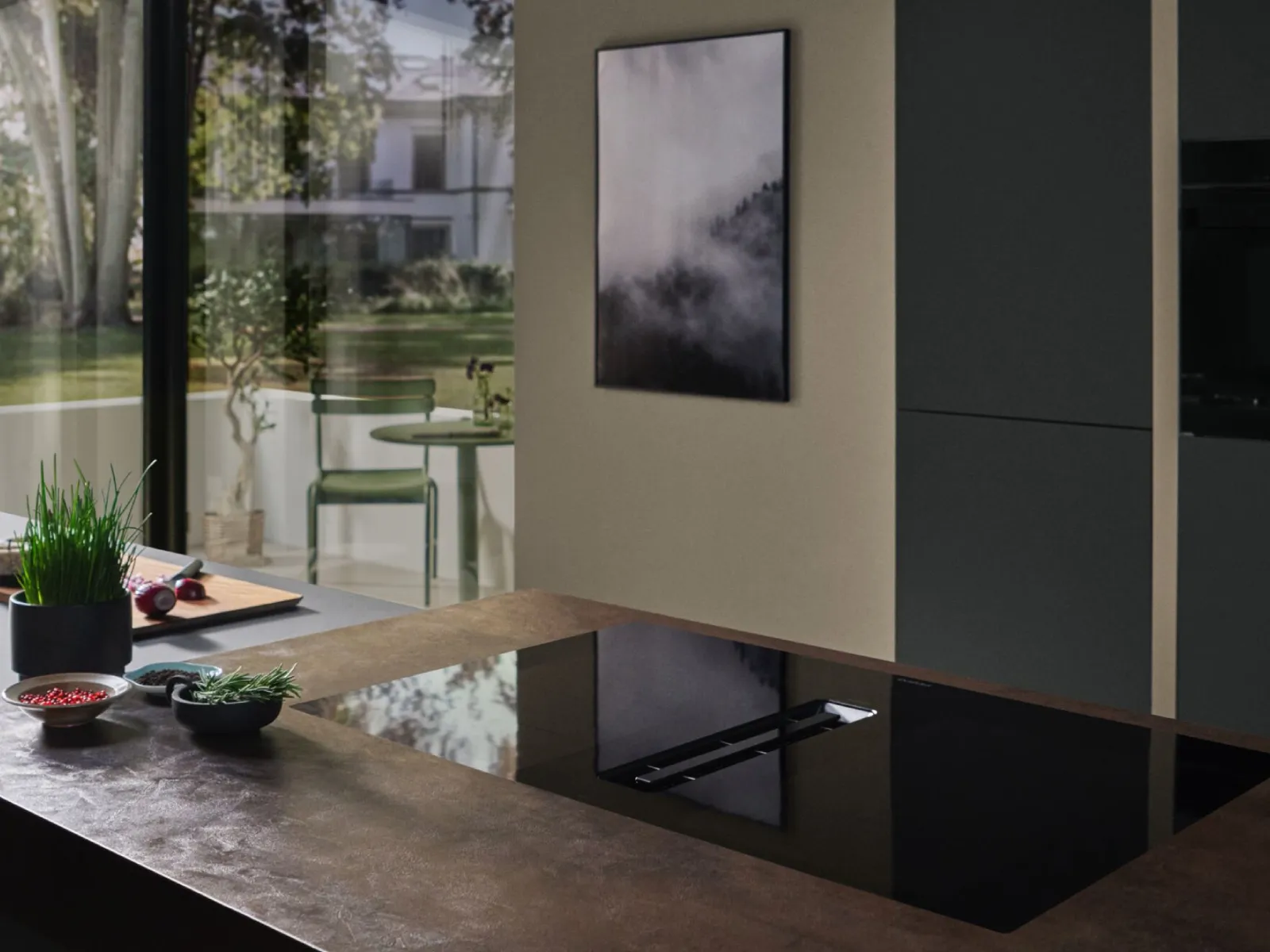
Hobs with an integrated extraction solution not only combine two appliances into one, but they also maximise both the available headroom and the amount of freedom you have to create exactly the kitchen you want. Choose from one of three worktop-mounted systems offered by Siemens: inductionAir Plus, glassDraft Air or modulAir System.
The specific aspects of an island solution
If you want to install the hob on an island in your open-plan kitchen, you can choose between a hob with an integrated extraction system or an island extractor hood. Island extractor hoods are connected to the ceiling by means of a ventilation duct and can be installed directly above the kitchen island. Due to the flexibility that ceiling mounting offers, they can be used in most rooms. Even sloped ceilings pose no problem for island extractor hoods thanks to a special installation kit.
You also have the option to install the ceiling extractor hood directly on the ceiling, which gives you a clear line of sight. With this variant, there are a few points to note. If you want to use an air exhaust system with your hood, this is only actually possible if the cooking vapours can be conducted outside directly through the ceiling. For effective extraction, the clearance between the hob and the hood must be no more than 155 cm. It is therefore important that you take into account the ceiling height when planning your extraction system. In addition, you will only be able to control the ceiling extractor hood using a remote control, and it will be more difficult to clean and replace the filters. You can overcome these limitations by opting for the varioLift, which can be lowered. This extractor hood is also installed directly on the ceiling and can be lowered as required for optimal performance. The varioLift is suitable for ceiling heights of up to 3.5 metres.